
In today’s hyper-competitive digital landscape, merely having a website isn’t enough. Your ecommerce store must be discoverable, credible, and irresistible to both search engines and real buyers. Organic search remains one of the most reliable and profitable traffic sources for e-commerce businesses, often outperforming paid advertising when done right.
Whether you sell products to other businesses in Pakistan or internationally, the strategic implementation of e-commerce SEO principles can mean the difference between being invisible and ranking on page one of Google for revenue-driving keywords.
This guide walks you through deep, actionable ecommerce SEO strategies from foundational auditing to advanced optimization techniques that collectively help you attract high-intent leads rather than just traffic.
What Is Ecommerce SEO?
SEO in e-commerce is a strategy and a skill of ensuring your online store is in a way that search engines comprehend it, index it, and rank it on the keywords that a buyer would enter in search of the kind of products or services that you offer. The e-commerce SEO demands extra concern with product pages, category structures, performance of the site, and purchasing intent as compared to generic SEO.
Unlike traditional SEO that focuses mainly on content, e-commerce SEO must optimize every part of your online store, including:
- Product pages
- Category pages
- Site structure
- Technical SEO elements
- Content and internal linking
The goal? Drive qualified organic traffic that converts into real leads and orders.
When done right, e-commerce SEO helps your store appear in relevant searches, increasing visibility, traffic, and ultimately sales and leads without paying for every click.
SEO vs Paid Ads: Which Is Better for Ecommerce Bussiness
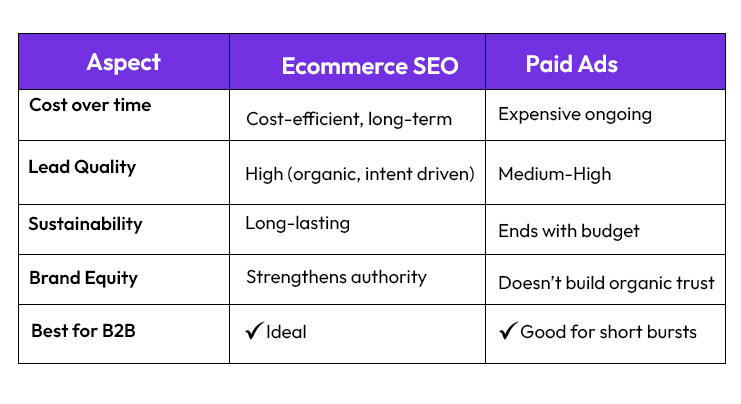
SEO fuels evergreen visibility, whereas ads only work as long as you spend. For B2B ecommerce in Pakistan, where decision-makers research thoroughly before buying, SEO is invaluable for trust, authority, and consistent lead flow.
How to do SEO of E-commerce Website: Core E-commerce SEO Strategies That Drive Results
Below is an expanded e-commerce SEO guide with the essential strategies, backed by recent trends and industry e-commerce SEO best practices for 2026.
1. Keyword Strategy — Intent-First Research
Keyword research for e-commerce isn’t about volume alone; it’s about buyer intent. According to SEO best practices, understanding intent distinguishes leads from casual browsers.
Key Actions:
✔ Identify buyer-intent keywords (transactional + informational)
✔ Use long-tail, specific phrases (e.g., “affordable ecommerce SEO services Pakistan”)
✔ Map keywords to relevant pages: product pages, category pages, blog posts
Tip: Align ecommerce SEO keywords with the user’s stage in the buying journey, transactional terms for product pages, and informational keywords for blog content.
2. Conduct a Comprehensive SEO Audit — The Foundation
Before optimizing, know where you stand. A full ecommerce SEO audit checklist :
✔ Site speed and performance
✔ Crawl errors and indexing issues
✔ Duplicate or thin content
✔ Mobile responsiveness
✔ Site architecture and link structure
Tools like Google Page Speed Insights and GT Metrix offer actionable reports to fix performance bottlenecks that directly affect rankings and conversions.
3. On Page SEO for Ecommerce — Optimize Every Page for Visibility & Engagement
On-page elements help search engines understand your content and entice users to click:
✔ Title Tags & Meta Descriptions — clear, persuasive, keyword-rich
✔ Header Tags (H1, H2) — structure content for humans and bots
✔ Image Optimization — compress images, use descriptive alt text
✔ URL Structure — concise, readable, and consistent
✔ Internal Linking — connect pages logically to distribute SEO value
These elements reinforce relevance and improve click-through rates (CTR) on search engine results pages (SERPs).
4. Product Page SEO — Your Revenue Engines
Product pages aren’t just conversion points; they are ranking assets. Modern e-commerce SEO requires:
✔ Unique product titles and descriptions
✔ Structured data for reviews, pricing, and availability
✔ High-quality visuals and videos
✔ Fast loading times and mobile-optimized layout
✔ Clear customer reviews and FAQs on the page
Pro Tip: Use schema markup to help search engines highlight product details directly in the search results, increasing visibility and CTR.
5. Category Page Optimization — Traffic Hubs That Drive Intent
Optimized category pages often deliver the highest quality traffic because they target broader yet still high-intent keywords. A strong category page should:
✔ Include helpful descriptive text
✔ Support filters and sorting for better usability
✔ Use internal links to related products and content
✔ Reflect keyword themes naturally
This combination helps search engines and users navigate your product hierarchy easily.
6. Content Strategy — Educate & Capture Leads
E-commerce SEO Strategies for Blogging and content pages aren’t just for storytelling; they help you:
✔ Rank for informational keywords
✔ Build authority and trust
✔ Support internal linking to product and category pages
Examples of content that attracts B2B ecommerce leads:
- “Ecommerce SEO Checklist for Ecommerce Stores”
- “How to Do SEO for E-commerce Websites in Pakistan”
- “Why Ecommerce SEO Matters for B2B Brands”
Content should be helpful, problem-solving, and aligned with search intent is one of the best SEO strategies for e-commerce sites.
7. Technical SEO — Rank & Convert
Technical SEO ensures your store is indexable and crawlable by search engines. Key factors include:
✔ Mobile-first design
✔ Fast page loading
✔ XML sitemaps and robots.txt
✔ No broken pages
✔ Clean site architecture
Google prioritizes websites that load fast and deliver a smooth UX, especially on mobile, which is critical for e-commerce success. Also, you can read our guide on the best Shopify themes for Pakistani ecommerce stores to find designs that boost conversions and user engagement.
8. Off-Page SEO for E-commerce — Build Trust & Authority
Quality backlinks are one of the e-commerce SEO Strategies that signal authority to search engines. Focus on:
✔ Industry directories
✔ Collaborations and guest articles
✔ Local portals and news sites
A strong backlink profile helps boost your overall domain authority and rankings.
9. Local SEO — Capture Local B2B Leads
If your e-commerce business serves Pakistani companies, local SEO matters. Include these common e-commerce SEO Strategies:
✔ Country and city-specific keywords
✔ Local listings and citations
✔ Local content references
Importance of SEO in e-commerce with Local optimization makes your brand more relevant to businesses searching within Pakistan.
10. Analytics & Conversion Tracking — Focus on Metrics That Matter
Use data to have the maximum benefits of e-commerce SEO for websites:
✔ Track keyword ranking improvements
✔ Monitor organic traffic growth
✔ Identify pages with high bounce rates
✔ Measure lead conversions and form submissions
Focus on leads and revenue, not just traffic numbers. If you want to grow your online store organically and boost visibility in search engines, check out the best e-commerce SEO services designed to help e-commerce businesses increase traffic and attract qualified leads.
E-commerce SEO Strategies Checklist to Follow and Implement for your Websites
| Focus Area | Key Actions |
| Keyword Strategy | Buyer intent mapping |
| Audit | Performance & index checks |
| On-Page SEO | Titles, URLs, images |
| Technical | Speed, mobile, crawlability |
| Product SEO | Structured data, unique content |
| Category SEO | Optimized hierarchy |
| Content | Informational ecommerce SEO blog content |
| Backlinks | High-quality links |
| Local SEO | Target Pakistan searches |
| Analytics | Track leads & conversions |
E-commerce SEO Mistakes to Avoid in 2026 — What Can Sink Your Rankings & Conversions
E-commerce marketers, even the experienced ones, may fall into these traps of SEO. Even a small error in competitive search in 2026 will ruin your whole SEO efforts and visibility, traffic, and precious leads.
Listed below are the most common and destructive e-commerce SEO blunders and the reasons as to why they are important and what occurs when these are overlooked.
1. Thin or Duplicate Content
Many e-commerce sites use manufacturer descriptions or copy the same text across similar products. This leads to thin, low-value pages that Google won’t rank well. Thin content also makes it harder for search engines to understand what makes your products unique, which hurts visibility and conversions.
2. Slow Page Load Speeds
Quick performance is no longer an option. Poor loading speed puts users off, and it boosts the bounce rate, which is an indicator of poor quality to the search engines. Even a few-second delay can lead to a tremendous drop in the positions and damage user experience.
3. Ignoring Mobile Optimization
Google prioritizes mobile-first indexing, meaning if your e-commerce site isn’t optimized for mobile devices (responsive design, navigation, and fast loads), you are handing ranking opportunities to competitors. Many e-commerce businesses still overlook mobile UX, which directly impacts rankings and conversions.
4. Missing Structured Data (Schema Markup)
Schema assists Google with the knowledge of your product information, price, availability, reviews and others, and may result in enriched results in SERPs. Your listings will be less informative and will not attract clicks without it.
5. Ineffective Internal Connectivity
Internal links are used to facilitate the search by users and search engines to your pages. In the absence of a robust internal linking mechanism, key product or content pages will tend to become so-called orphans in the sense that they never get indexed or ranked high.
6. Concentrating on Traffic Over Conversions
Other businesses encourage traffic without optimization on the event that occurs after the click, such as lead capture, product interaction, or checkout process. The visits do not necessarily indicate growth of the business unless you develop the visitors into leads or buyers.
7. Neglect in regard to User Experience (UX) Signals
The search engines are also taking into consideration the interaction of the users with the site in terms of time on page, bouncing, ease of navigation, and so on. The ugly user experience with confusing menus, the complicated checkout process, or the messy appearance of the pages informs the search engines that your site does not meet the expectations of its visitors.
In short: All these problems of technical gaffs, such as page speed and structured data, as well as content and UX, have a direct impact on the search engine ranking of your e-commerce site and the way the end-user interacts with it. These are not the only mistakes that need correction to complete e-commerce SEO in 2026 it is a mandatory task to produce organic traffic and generate qualified leads, and transform visitors into customers.
Conclusion: Partner with the Best E-commerce SEO Company in Pakistan
E-commerce SEO is not merely a promotional strategy but a business venture that will enable your online shop to achieve long term presence, good organic traffic, and perpetual growth. An optimal approach on ecommerce site search engine enhances your ranking as well as credibility of your brand and trustworthiness among users, therefore enabling potential customers to locate and interact with your products at the very time they need it.
Fulfillit the best ecommerce platform for SEO, we specialize in affordable and effective ecommerce services that help businesses in Pakistan and beyond:
✔ SEO audits tailored for ecommerce
✔ Product and category optimization
✔ Content and keyword strategy
✔ Technical SEO and performance tuning
Ecommerce SEO Strategies doesn’t just help your business get seen; it helps your business get chosen. Partner with us to boost your visibility, attract qualified leads, and grow your business sustainably.
FAQs
- What is the job of ecommerce SEO expert?
Ecommerce SEO specialists implement best the practices aimed at making the your online store to feature higher in search engines when the appropriate keywords are typed, which will lead to the inflow of organic customers and leads.
2. How long before ecommerce SEO shows results?
SEO will usually start bearing recognizable fruits within 3-6 months for example seo for fashion ecommerce and its enhanced performance will progress as time goes by.
3. What should I focus on first for SEO of my ecommerce website?
Begin with search engine optimization research and audit. All other improvements are based on these. Also a good ecommerce SEO agency plays an important role.
4. Do product pages of my online store need unique descriptions?
Yes, SEO for ecommerce product pages is all about original rich-descriptions, with lots of key-words, are better in the rankings as well as in the conversions.
5. Is blogging necessary for ecommerce SEO?
Although optional, blogging assists you in capturing early-stage purchasers and internal connection to high-value pages.