
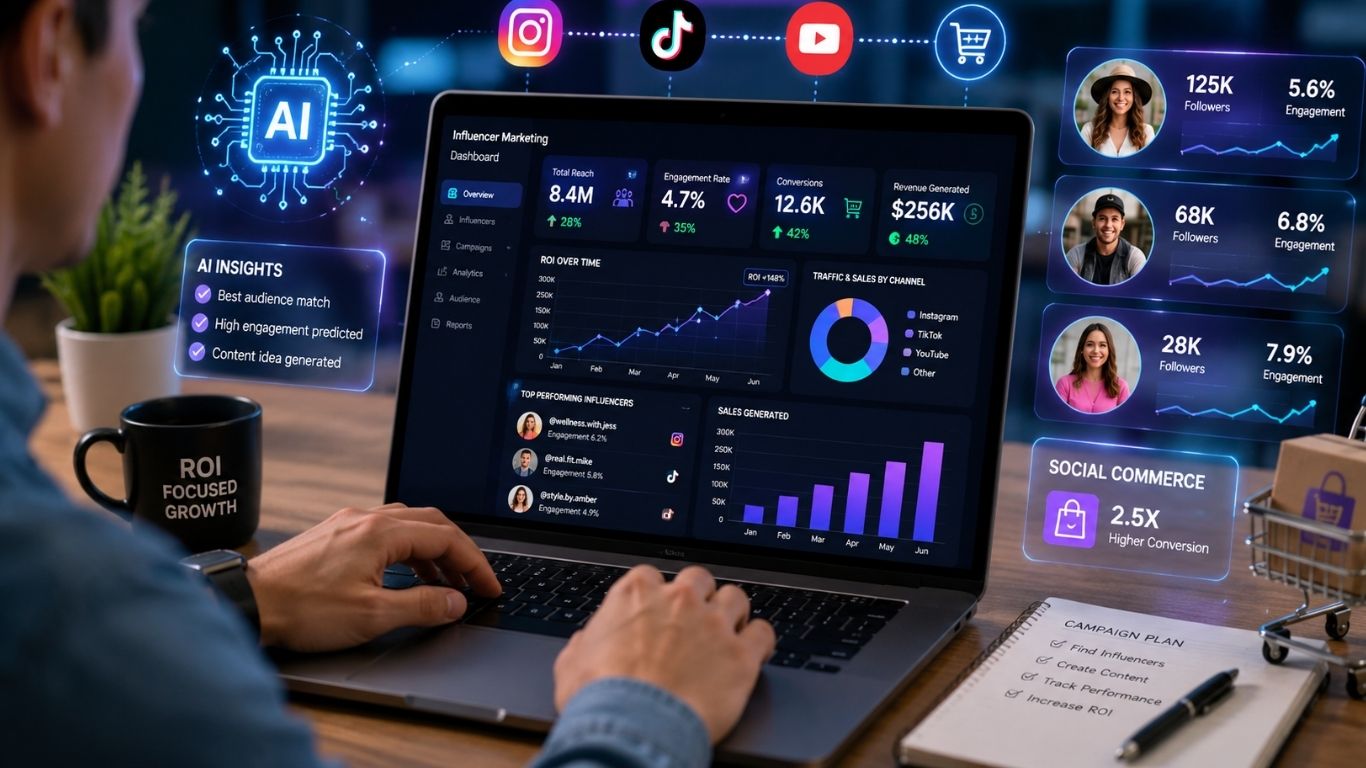
Influencer marketing is no longer a trend; it’s a core business strategy. If you’re new to this strategy, start with our complete guide to influencer marketing to understand the fundamentals before optimizing your ROI.
The Influencer Marketing Imperative: Why 2026 is Different
The influencer marketing industry is experiencing unprecedented growth, with its market value projected to continue its upward trajectory well into 2026. This expansion is fueled by increasing marketing budgets, with a significant majority of marketers planning to boost their investments in this area. However, this growth also brings increased complexity and a demand for more sophisticated approaches to campaign planning and execution. The focus has decisively shifted from vanity metrics to tangible business results, making Influencer Marketing ROI 2026 a critical metric for success.
According to the Influencer Marketing Benchmark Report, brands continue to increase their influencer marketing budgets because the channel consistently delivers strong engagement and measurable business returns.
Key Shifts Driving Influencer Marketing in 2026:
• AI Integration: Artificial Intelligence is no longer a futuristic concept but a present-day reality, deeply embedded in influencer discovery, content creation, and performance prediction. A staggering 86% of creators already utilize generative AI, and nearly 60% of marketers are integrating AI into their influencer operations.
• Rise of Social Commerce: The ability to purchase directly within social media platforms is transforming the consumer journey. Creator-led shopping experiences are becoming a primary driver of sales, with conversion rates on shoppable posts averaging between 2-5%.
• Professionalization of Creators: Influencers are increasingly viewed as professional content creators and media brands. This shift emphasizes long-term partnerships and brand ambassadorships over one-off campaigns, fostering deeper trust and more consistent messaging.
• Emphasis on Micro and Nano-Influencers: Smaller, more niche influencers are proving to be highly effective, offering significantly higher engagement rates at a fraction of the cost compared to their macro counterparts.
Top Strategies to Maximize Influencer Marketing ROI in 2026
Achieving a strong Influencer Marketing ROI 2026 requires a strategic, data-driven approach. Here are the top strategies business owners should implement to ensure their campaigns yield maximum returns:
1. Leverage AI for Hyper-Targeting and Predictive Analytics
AI is revolutionizing every facet of influencer marketing, from identifying the perfect collaborators to forecasting campaign success. For small businesses, this means moving beyond manual searches and embracing AI-powered tools for:
Smarter Influencer Discovery and Vetting
AI algorithms can analyze vast amounts of data to identify influencers whose audience demographics, interests, and engagement patterns perfectly align with your target customers. This ensures your message reaches the most receptive audience, significantly improving your chances of conversion.
Predictive Performance Analysis
Before launching a campaign, AI can predict potential engagement rates, reach, and even sales, allowing you to optimize your strategy and allocate your budget more effectively. This minimizes risk and maximizes the likelihood of a positive ROI.
Content Optimization
AI can assist creators in brainstorming ideas, generating assets, and refining content to ensure it resonates deeply with their audience, leading to higher engagement and better campaign outcomes.
2. Embrace Micro and Nano-Influencers for Authentic Engagement
While mega-influencers offer broad reach, micro-influencers (10K-100K followers) and nano-influencers (1K-10K followers) consistently deliver superior engagement rates and often come at a lower cost. For small businesses, this translates to a more efficient use of marketing spend and a higher Influencer Marketing ROI 2026.
Higher Engagement:
Micro-influencers on Instagram average 3.2% engagement, while TikTok micro-creators can achieve up to 5.8%. Nano-influencers on TikTok can even reach 7-12% engagement. This is significantly higher than larger influencers, indicating a more dedicated and responsive audience.
Cost-Effectiveness:
Micro-influencers offer 3.2x higher engagement at 60% lower cost compared to macro-influencers. This allows small businesses to run multiple campaigns or collaborate with several niche influencers, diversifying their reach and impact.
Authenticity and Trust:
These smaller creators often have a more personal connection with their followers, fostering a higher level of trust and credibility. This authenticity is crucial for driving purchase decisions and building brand loyalty.
3. Implement Performance-Based Partnerships and Affiliate Models
To directly tie influencer efforts to revenue, shift towards performance-based compensation models. This strategy aligns the influencer’s success with your business objectives, directly impacting your ROI.
• Affiliate Marketing:
By providing unique tracking links or codes, you can accurately attribute sales directly to specific influencers. This allows for clear measurement of revenue generated and ensures influencers are compensated based on tangible results.
• Conversion Rate Optimization (CRO):
Focus on optimizing the entire customer journey from influencer content to purchase. This includes clear calls-to-action, streamlined landing pages, and seamless checkout processes to maximize the effectiveness of influencer-driven traffic.
• Cost Per Acquisition (CPA) Tracking:
Monitor the CPA for each influencer campaign. Benchmarks for e-commerce range from $10-$50, while SaaS can be $50-$200, and B2B $100-$500+. Aim to keep your CPA within a profitable range to ensure a positive ROI.
4. Develop Long-Term Brand Ambassador Programs
Moving beyond one-off sponsored posts, cultivating long-term relationships with influencers transforms them into genuine brand ambassadors. This strategy builds sustained trust and authority, leading to more consistent and higher Influencer Marketing ROI 2026.
• Consistent Brand Messaging:
Ambassadors who genuinely love your product can integrate your brand more naturally into their content, creating authentic and persuasive endorsements over time.
• Increased Trust and Credibility:
Audiences are more likely to trust recommendations from influencers they see consistently using and advocating for a brand, rather than those promoting a different product every week.
• User-Generated Content (UGC):
Long-term partnerships often result in a wealth of high-quality UGC that can be repurposed across your own marketing channels, extending the value of the collaboration.
5. Optimize for Social Commerce and Multi-Channel Presence
With social media platforms increasingly becoming shopping destinations, optimizing for social commerce is vital. Furthermore, a multi-channel approach ensures your brand is visible where your audience spends their time.
• In-App Checkouts:
Facilitate direct purchases within social media platforms to reduce friction in the buying process. This seamless experience can significantly boost conversion rates.
• Omnichannel Strategy:
Recognize that the average person uses 7.6 social media platforms. Ensure your influencer campaigns are strategically distributed across relevant channels to maximize reach and engagement. This means tailoring content for platforms like Instagram, TikTok, and YouTube, where engagement rates and content formats vary.
• Content Optimization:
Adapt content formats to suit each platform. Short-form video content on TikTok and Instagram Reels continues to dominate, while YouTube remains strong for longer-form, in-depth reviews and tutorials.
Measuring and Optimizing Your Influencer Marketing ROI
Effective measurement is the bedrock of maximizing your Influencer Marketing ROI 2026. Without clear metrics, it’s impossible to identify what’s working and what needs adjustment.
• Beyond Vanity Metrics:
While likes and comments are indicators of engagement, focus on metrics that directly impact your business goals, such as website traffic, lead generation, sales conversions, and customer lifetime value (CLTV).
• Attribution Tracking:
Utilize robust analytics tools to accurately track the customer journey from initial influencer exposure to final purchase. This helps in understanding the true impact of each influencer and campaign.
• A/B Testing:
Continuously test different influencer types, content formats, calls-to-action, and landing pages to identify the most effective combinations for your target audience. Data-driven adjustments are key to continuous improvement.
• Engagement Rate (ER):
Monitor ER across platforms. For instance, TikTok generally boasts higher engagement rates (4-8% average) compared to Instagram. Understanding these benchmarks helps in setting realistic expectations and optimizing platform choice.
• Cost Per Thousand Impressions (CPM):
Compare CPM across platforms to ensure cost-efficiency. TikTok offers some of the lowest CPMs ($2-$6), making it an attractive option for broad reach.
Conclusion: Your Path to Influencer Marketing Success in 2026
The landscape of influencer marketing in 2026 presents immense opportunities for business owners and small businesses willing to adapt and innovate. By embracing AI-powered tools, focusing on authentic micro and nano-influencer collaborations, implementing performance-based strategies, fostering long-term brand ambassador relationships, and optimizing for social commerce, you can significantly enhance your Influencer Marketing ROI 2026.
Remember, success in this evolving field hinges on a commitment to data-driven decisions, continuous optimization, and a genuine understanding of your audience. By prioritizing these strategies, your business can not only navigate the complexities of the modern marketing world but also thrive, building stronger brand connections and achieving remarkable growth.
Frequently Asked Questions (FAQs)
1. What is the average Influencer Marketing ROI in 2026?
In 2026, businesses typically see an average ROI of $5.20 to $5.78 for every $1 invested in influencer marketing. E-commerce brands often achieve higher returns, ranging from 5:1 to 10:1, while B2B companies can expect 3:1 to 8:1.
2. How does AI impact Influencer Marketing ROI in 2026?
AI significantly boosts Influencer Marketing ROI by enabling smarter influencer discovery, predictive campaign performance analysis, and content optimization. This leads to more targeted campaigns, reduced risks, and higher engagement and conversion rates.
3. Why are micro-influencers important for ROI in 2026?
Micro-influencers are crucial for maximizing ROI in 2026 due to their higher engagement rates (e.g., 3.2% on Instagram, 5.8% on TikTok for micro-creators) and lower costs. Their authentic connection with niche audiences drives better conversions and builds trust.
4. What are the key Influencer Marketing trends for 2026?
Key Influencer Marketing trends for 2026 include the widespread adoption of AI, the rise of social commerce with in-app checkouts, the professionalization of creators leading to long-term brand ambassadorships, and a continued focus on micro and nano-influencers.
5. How can small businesses measure Influencer Marketing ROI?
Small businesses can measure Influencer Marketing ROI by tracking key metrics like website traffic, lead generation, sales conversions, and customer lifetime value. Utilizing affiliate links, unique discount codes, and robust analytics tools are essential for accurate attribution.