
What if the biggest mistake in your marketing strategy right now is paying too much for an influencer who does not actually care about your brand?
Pakistani businesses spend millions of rupees every year on celebrity endorsements and macro-influencer deals, only to watch those campaigns generate impressive views but zero sales. Meanwhile, brands that pivot to micro-influencer marketing in 2026 are quietly outperforming everyone else. They are getting five times more engagement per rupee spent, building genuine trust with exactly the right audiences, and scaling their results consistently.
This complete guide breaks down exactly how to build a micro-influencer marketing strategy that works in 2026. Whether you are a startup in Lahore, an e-commerce brand in Karachi, or a growing business looking to stretch your marketing budget further, this guide gives you the tools, frameworks, and real-world tactics to get there.
What is Micro-Influencer Marketing?
Micro-influencer marketing is a focused form of influencer marketing where brands partner with social media creators who have smaller but highly engaged, niche audiences. Instead of chasing raw follower numbers, this strategy prioritizes the quality of engagement, authenticity of the creator, and relevance to a specific target audience.
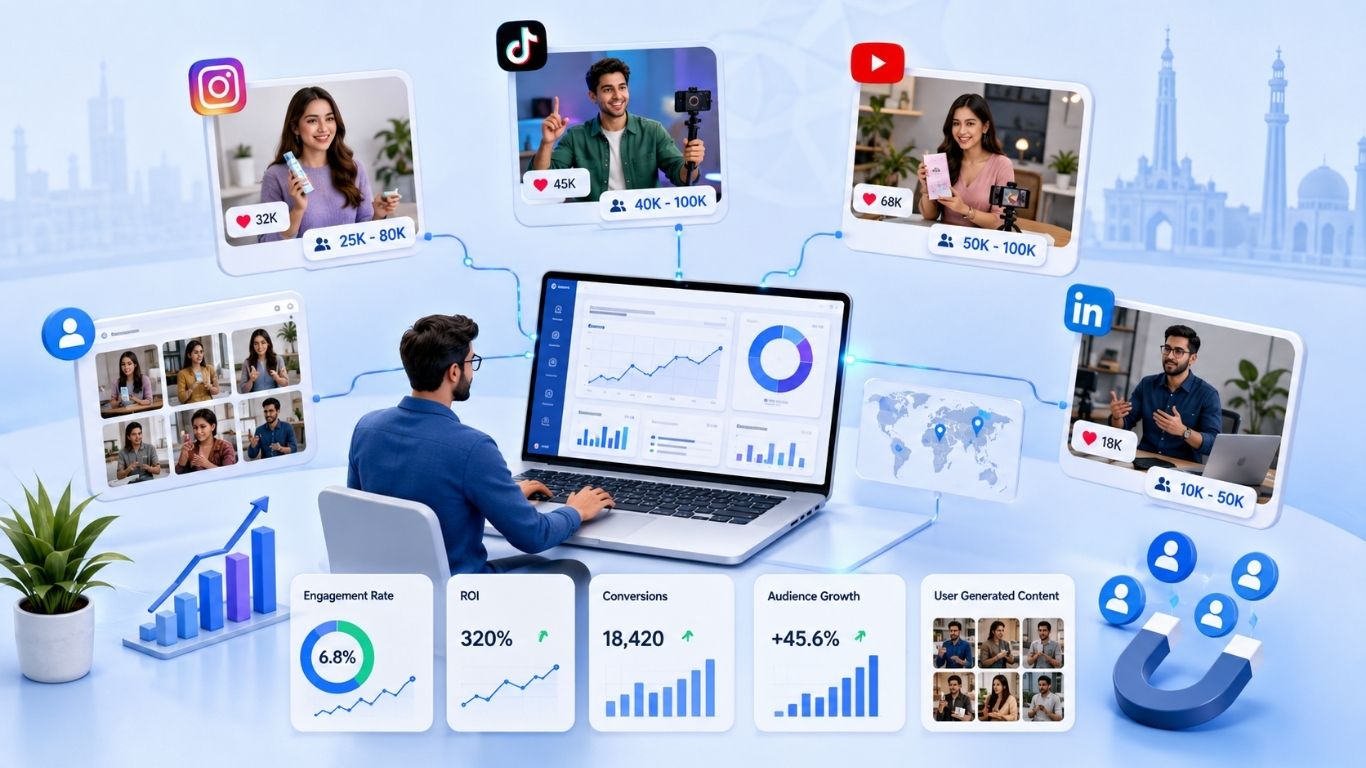
A micro-influencer typically has between 10,000 and 100,000 followers. What makes them genuinely powerful is not the size of their audience but the depth of connection they share with it. Their followers treat them like a knowledgeable friend rather than a celebrity, which is exactly the psychological foundation that drives real purchasing decisions.
Micro-influencer marketing sits within the broader umbrella of influencer marketing, but it operates on completely different principles. Rather than broadcasting to millions of passive users, you connect directly with tight communities that are already interested in your niche. The result is stronger brand awareness, higher conversion rates, and a much more efficient return on investment.
KEY DEFINITION:
Micro-Influencer Marketing = Partnering with creators (10K to 100K followers) in specific niches to drive authentic engagement, real conversions, and measurable ROI for your brand.
Why Micro-Influencer Marketing works better in 2026?
The influencer marketing landscape has shifted significantly. Traditional paid advertising on platforms like Meta and TikTok has become far more expensive, with rising CPMs and shrinking returns. At the same time, audiences have grown cynical toward polished, corporate looking sponsored content. They skip it, ignore it, or actively distrust it.
Micro-influencers fill this gap. They produce content that feels organic. Platforms like Instagram, TikTok, and YouTube actively reward this kind of authentic, community focused content with better organic reach. This means micro-influencer partnerships deliver compound value: paid reach plus organic amplification.
The numbers speak for themselves:
| 60%Higher engagement rate than mega-influencers | 5.4xMore engagement per dollar (HubSpot, 2026) | $5.20Average ROI per $1 spent | 2x-3xHigher conversion than macro campaigns |
For Pakistani brands specifically, this approach opens powerful opportunities. A niche creator with 15,000 followers in Lahore who focuses on local food culture can drive more meaningful results for a restaurant or food brand than a national celebrity with a mixed and passive audience of two million.
The era of paying one big name to carry your entire campaign is over. The new standard is building networks of genuine creators who speak directly to the communities your brand serves.
Types of Influencers: Which Tier Fits Your Brand?
Before building your strategy, you need to understand where micro-influencers sit in the broader influencer ecosystem. Each tier delivers different strengths, and knowing these differences helps you allocate your budget with precision.
| Type | Followers | Avg. Engagement | Best Use Case | Approx. Cost Per Post |
| Nano-Influencer | 1K to 10K | Up to 8%+ | Hyper-local awareness, community trust | Free product or minimal fee |
| Micro-Influencer | 10K to 100K | 3% to 6% | Niche targeting, conversions | $200 to $2,000 |
| Macro-Influencer | 100K to 1M | 1% to 3% | Broad reach, national campaigns | $5,000 to $20,000+ |
| Mega/Celebrity | 1M+ | Under 1% | Mass awareness, prestige signaling | $20,000 to $1M+ |
For most small and medium-sized Pakistani businesses, combining nano and micro-influencers delivers the strongest results. Nano-influencers provide organic word-of-mouth buzz at near-zero cost, while micro-influencers offer slightly broader reach with content polished enough to repurpose in paid ads.
Choosing the Right Platform for Your Campaign
Platform selection is one of the most consequential decisions in your entire strategy. Micro-influencers often dominate specific platforms, and matching your campaign goals to the right channel makes the difference between strong results and wasted spend.
Reels and Stories are the backbone of micro-influencer campaigns in 2026. Instagram works exceptionally well for visual products including fashion, beauty, food, and lifestyle brands. Shoppable posts and swipe-up links create a direct path from discovery to purchase, making it ideal for both awareness and conversion goals.
TikTok
TikTok offers unmatched viral potential for short-form content and reaches younger audiences with incredible efficiency. The algorithm rewards authenticity over production quality, which naturally suits micro-influencer content. Product demonstrations, unboxings, and behind-the-scenes content perform especially well here.
Youtube
YouTube is the best platform for detailed product reviews, tutorials, and storytelling. Micro-influencers on YouTube build deeply loyal audiences who watch full videos and trust their recommendations over time. It is particularly powerful for higher-consideration purchases where the buyer needs detailed information before deciding.
Twitter(X)
Twitter works well for trend-based campaigns, live discussions, and opinion-driven niches. It suits brands in tech, finance, news, and current affairs particularly well. Micro-influencers here often drive conversation rather than direct conversions.
LinkedIn is the most effective platform for B2B micro-influencer marketing. If your brand targets business professionals, HR decision-makers, or industry experts, LinkedIn micro-influencers who produce thought leadership content can deliver exceptional results.
Platform selection should always follow your target audience rather than your personal preference. If your ideal customer is a 22-year-old interested in streetwear in Karachi, TikTok and Instagram are your priority. If you are a B2B SaaS company targeting HR professionals, LinkedIn micro-influencers will serve you far better.
Step-by-Step: Building Your Micro-Influencer Strategy
A strategy without structure leads to wasted budgets and missed opportunities. Here is a proven six-step framework you can follow from day one.
- Define Your Campaign Goals
Be specific about what you want this campaign to achieve. Are you targeting direct product sales, website traffic, email sign-ups, or general brand awareness? Each goal demands a different influencer type, platform, and content format. Vague goals like more visibility make it impossible to measure success or optimize your spend.
- Identify Your Target Audience
Define exactly who you are speaking to. Include their age range, location, interests, online behavior, and purchasing habits. The more precisely you define your target audience, the easier it becomes to find micro-influencers whose followers match that description. This is the single most important input into your entire strategy.
- Set a Realistic Budget
Micro-influencer campaigns are far more affordable than macro alternatives, but you still need a clear budget going in. For brands starting out, a pilot campaign of around Rs. 50,000 to Rs. 200,000 working with five to ten nano or micro-influencers is a smart and manageable starting point. Account for product costs, creator fees, and any tools you plan to use.
- Develop Your Content Strategy
Decide what type of content you want created and how much creative freedom you will give your influencers. Provide clear messaging guidelines, key talking points, any required disclosure language, and brand tone notes. Then step back and let the creator tell the story in their own voice. That authentic delivery is precisely what makes this strategy work.
- Find and Vet Your Influencers
Use a combination of manual hashtag research, existing customer discovery, and influencer platforms to build your shortlist. Then vet each creator carefully for authentic engagement, genuine audience quality, and alignment with your brand values before making contact.
- Launch, Monitor, and Optimize
Start with a pilot wave of five to seven creators. Monitor performance in real time and use that data to decide which partnerships to scale. Do not wait until a campaign ends to review results. Adjust your creative direction, messaging, or platform mix as you gather feedback.
How to Find the Right Micro-Influencers?
This is where most brands go wrong. They focus entirely on follower counts and overlook the factors that actually determine whether an influencer partnership will deliver results.
What to Look for Beyond Follower Count?
• Engagement Rate: Target creators with at least 3% engagement on Instagram or TikTok. High follower counts paired with low engagement is a reliable sign of purchased audiences and should eliminate a creator from your list immediately.
• Audience Authenticity: Scroll through the comments section. Real engagement includes genuine questions, opinions, and personal responses from followers. Repetitive emoji-only comments or vague phrases at scale indicate fake activity.
• Niche Alignment: The creator’s content theme must naturally connect to your product or service. A fitness creator promoting a protein supplement brand makes sense. A travel creator promoting accounting software does not. Relevance always beats reach.
• Content Quality: The content does not need to be Hollywood-produced, but it should be consistent, visually clear, and well-presented enough to reflect positively on your brand.
• Past Sponsorships: Review how the creator has handled previous brand partnerships. Did the sponsored content feel organic or forced? Did the audience respond positively or express annoyance?
• Values Alignment: In 2026, audiences care deeply about which brands their favorite creators endorse. A creator whose public positions contradict your brand values can create reputational risk quickly.
Outreach, Creative Briefs and Compensation
How to Reach Out Effectively
Generic partnership pitches are ignored every day by micro-influencers with any meaningful following. The single biggest difference between an accepted collaboration and a deleted message is personalization. Reference something specific they published recently, explain exactly why their audience is a natural fit for your brand, and state the value proposition clearly from the very first message.
OUTREACH EXAMPLE :
Instead of writing: ‘Hi, we would love to collaborate with you.’
Try: ‘I noticed your recent post about sustainable skincare in Lahore. It aligns perfectly with what we are building. Our new product line targets the same audience that values clean ingredients, and I think your perspective would resonate genuinely with your community.’
Writing a Strong Creative Brief
A creative brief sets expectations for both sides without making the creator feel like they are reading from a corporate script. A strong brief includes your key brand message, the specific product or service being promoted, any mandatory elements such as a discount code or tracking link, the content format required such as a Reel or YouTube video, the posting timeline, and FTC-required disclosure language such as #ad or #sponsored.
Your brief should also include a clear do-not list. Stating upfront what you do not want protects your brand image and avoids awkward revision cycles without micromanaging the creator’s natural style.
Compensation Models Compared
| Model | How It Works | Best For |
| Product Gifting | Send free product in exchange for honest organic coverage | Nano-influencers, product launches, tight budgets |
| Flat Fee | Fixed payment per post or content package | Established creators, reliable output, polished campaigns |
| Affiliate Commission | Creator earns a percentage of each sale via unique link or code | E-commerce brands, performance-driven campaigns |
| Hybrid Model | Base fee plus affiliate commission and optional bonus triggers | Scaling campaigns with measurable, shared-incentive ROI |
The hybrid compensation model is increasingly the industry standard in 2026 because it aligns the creator’s motivation directly with your business outcome. They earn more when they perform better, which naturally encourages genuine promotion over passive posting.
Authenticity and Niche Marketing: The Foundation of Success
Authenticity is not a marketing buzzword in 2026. It is the single most critical factor behind why micro-influencer marketing outperforms every other digital advertising channel. Consumers, especially Gen Z and younger millennials, grew up watching traditional advertising fail them. They have developed an almost instinctive ability to detect when a recommendation is genuine versus paid performance.
Micro-influencers built their followings through real content about things they actually care about. Their audiences trust them specifically because they are not celebrities paid to hold up products. They are real people who talk about their genuine experiences, and that quality is the most valuable asset you are accessing when you partner with them.
Niche marketing amplifies this effect. A micro-influencer who focuses exclusively on plant-based cooking in Pakistan has an audience that is specifically there for that content. When that creator talks about a product that fits naturally into their world, the recommendation lands with far more weight than a broad lifestyle creator casually mentioning the same product between unrelated posts.
AUTHENTICITY RULE : Never force a creator to say exactly what you want them to say. Provide the facts, the talking points, and the brand guidelines. Then let them translate that into their own voice. Audiences know the difference, and so do algorithms.
User Generated Content and Content Repurposing
One of the most underappreciated advantages of micro-influencer marketing is the content pipeline it creates for your brand. Every post, Reel, or video produced through an influencer partnership is a genuine creative asset you can repurpose across multiple channels at a fraction of what a professional brand shoot would cost.
User-generated content produced by micro-influencers builds trust in a way that brand-created content simply cannot replicate. When a potential customer sees someone who looks and lives like them using and recommending your product in a natural, real setting, the psychological barrier to purchasing drops significantly.
The repurposing strategy works like this: once an influencer posts and their audience engages organically, you license that content and deploy it in paid ads, email campaigns, website testimonials, and product pages. Creator-origin ads consistently outperform brand-produced ads on click-through rates because audiences experience them as genuine recommendations rather than advertising messages.
IMPORTANT : Always secure content usage rights in your influencer contract before the campaign launches. Specify exactly which platforms, for how long, and in which territories you can reuse the content. Failing to do this creates legal complications when you want to run that high-performing Reel as a paid ad.
Measuring ROI and the Metrics That Matter
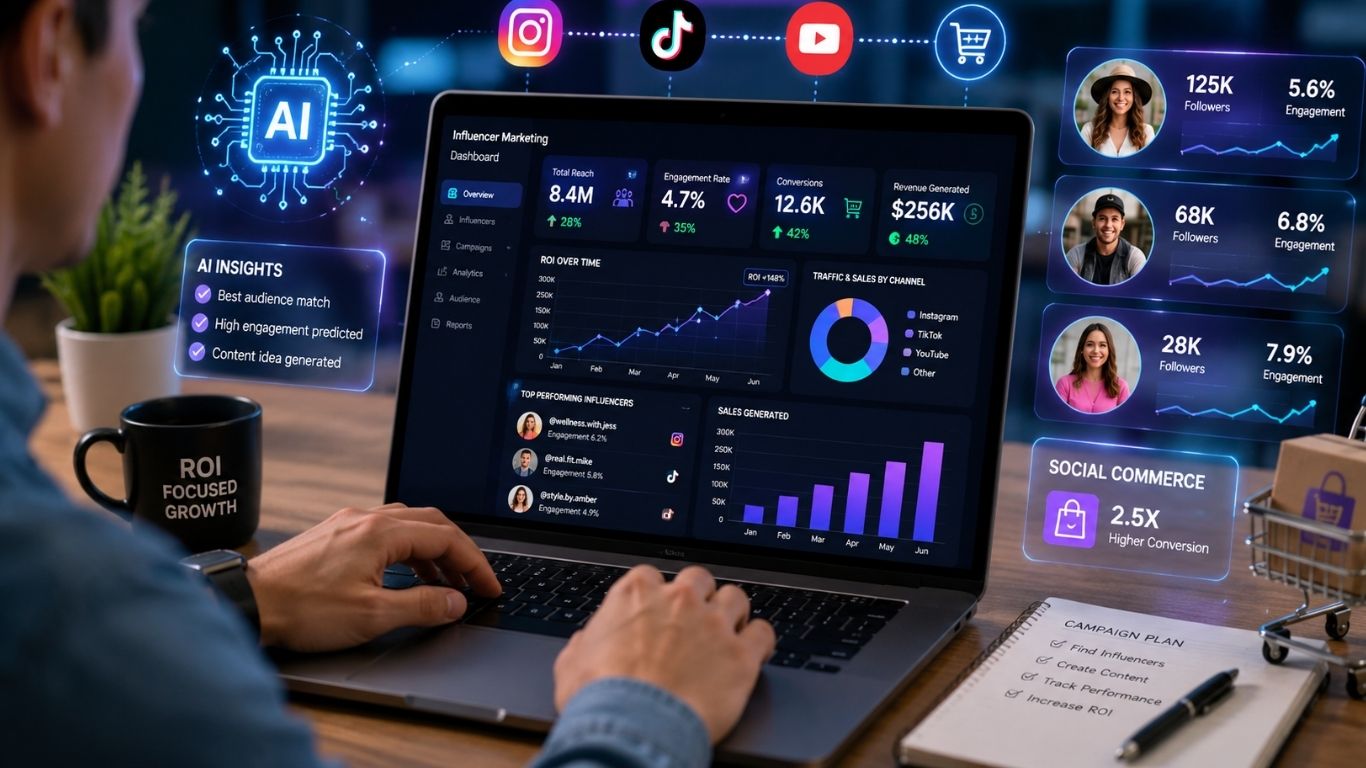
Influencer marketing was historically criticized for poor attribution. In 2026, that criticism no longer holds. Brands running disciplined micro-influencer programs now have access to tracking tools that bring attribution sophistication to the same level as paid social campaigns.
| Metric | What It Measures | Why It Matters |
| Engagement Rate | Likes, comments, shares, and saves per post | Indicates genuine audience investment in the content |
| Conversion Rate | Percentage of traffic that completes a desired action | Directly measures how well the campaign drives sales |
| Reach and Impressions | Unique users who saw the content | Tracks brand awareness and campaign visibility |
| Click-Through Rate | Percentage of viewers who clicked a shared link | Shows how well content drives traffic to your site |
| Cost Per Engagement | Total spend divided by total engagements | Benchmarks influencer efficiency against paid ads |
| Discount Code Redemptions | Sales using a creator’s unique promo code | Provides direct attribution of influencer-driven revenue |
| Return on Investment | Revenue generated versus total campaign cost | The ultimate measure of whether the strategy is profitable |
Influencer Marketing Platforms and Tools
Managing multiple micro-influencer relationships through manual DMs and spreadsheets works at a very small scale. As your program grows, dedicated tools become essential for staying organized, maintaining consistency, and scaling efficiently.
Upfluence
Upfluence is one of the most widely used influencer discovery and analytics platforms available. It allows brands to search for creators by niche, engagement rate, audience demographics, and platform. Its strength is detailed analytics that let you evaluate a creator’s historical performance across multiple campaigns before you commit to any partnership.
AspireIQ
AspireIQ, now known as Aspire, is built specifically for brands that want to manage ongoing influencer relationships at scale. It streamlines the entire workflow from discovery and outreach through contracts, content approvals, and payments. It is a strong choice for brands running ambassador programs with dozens of active creators simultaneously.
Other Tools Worth Exploring
• Grin: Designed specifically for e-commerce brands, with deep integration into Shopify and WooCommerce stores.
• Creator.co: A strong option for discovering nano and micro-influencers at affordable rates, popular among growing brands.
• Sprout Social: For brands that want to manage influencer campaigns from within a unified social media management platform.
Common Mistakes to Avoid
Understanding what not to do is just as valuable as knowing the right steps. These are the mistakes that most reliably derail micro-influencer campaigns.
- Choosing influencers based on follower count alone
A creator with 80,000 followers and a 0.5% engagement rate will consistently deliver worse results than one with 12,000 followers and a 7% engagement rate. Always evaluate engagement quality and audience authenticity over raw numbers.
- Over-scripting the content
When creators sound like they are reading a brand brochure, audiences disengage immediately. Provide clear guidelines but give creators the freedom to communicate in their natural voice. That authenticity is the entire point of micro-influencer marketing.
- Running one-off campaigns with no follow-up
A single sponsored post rarely builds lasting brand awareness. Always-on ambassador programs, where a creator mentions your brand consistently over months, outperform episodic single-post deals every time. Long-term relationships compound trust incrementally.
- Skipping disclosure requirements
Every paid partnership must be clearly disclosed through #ad, #sponsored, or the platform’s native paid partnership tag. Failing to do this violates FTC guidelines and undermines the very trust you are trying to build with the creator’s audience.
- Not setting up proper tracking from the start
Measuring success by likes alone tells you almost nothing useful. Set up UTM tracking, unique discount codes, and conversion goals from day one so you have real data to learn from, optimize around, and present to stakeholders.
- Ignoring niche and audience misalignment
Partnering with a creator whose audience does not match your target customer, regardless of how large or engaged that audience is, will not drive meaningful results. Relevance is always more important than reach.
Final Thoughts
Micro-influencer marketing in 2026 is not a trend. It is the most cost-effective, authentic, and measurable way for brands of all sizes to build real connections with the audiences that matter most to their business.
The brands winning right now are not chasing celebrity partnerships or spending on vanity metrics. They are building networks of genuine creators, optimizing based on real conversion data, and treating influencer relationships as long-term brand assets rather than one-time transactions.
Start with a small pilot campaign. Be intentional about creator selection. Track everything
from day one. Build long-term relationships with the creators who deliver results. And scale what works. That is the entire strategy, applied consistently over time.
Ready to grow your brand through micro-influencer marketing? Fulfillit’s expert team handles everything from influencer discovery to ROI tracking, so you can focus on what matters most.
Everything covered in this guide is exactly what we do at Fulfillit. You can get these services for your brand today and let our experts handle the strategy, the creators, and the results.
FAQ’S
- How many followers does a micro-influencer have?
A micro-influencer typically has between 10,000 and 100,000 followers. Creators below that range with 1,000 to 10,000 followers are called nano-influencers, while those above it are macro-influencers. The defining characteristic of a micro-influencer is not just follower count but the quality of engagement and connection with their audience.
- How much does it cost to work with a micro-influencer in Pakistan?
Costs vary significantly by niche, platform, audience quality, and the creator’s experience level. Many Pakistani micro-influencers work with brands for free products combined with a modest flat fee. Starting with product seeding for nano-influencers and paid packages for established micro-influencers is a practical and cost-effective approach for brands new to this channel.
- What is a good engagement rate for a micro-influencer?
For Instagram and TikTok micro-influencers, an engagement rate of 3% to 6% is considered strong. Rates above 6% are excellent and indicate a particularly loyal, active community. Anything consistently below 1% is a warning sign that the audience may not be genuine or that the content is not resonating with followers.
- How is micro-influencer marketing different from affiliate marketing?
Affiliate marketing is a performance-based model where creators earn commissions on the sales they directly generate. Micro-influencer marketing is a broader partnership strategy that can include affiliate components but also covers awareness building, content creation, and brand positioning goals that go beyond direct sales tracking alone.
- Is TikTok or Instagram better for micro-influencer campaigns?
Both platforms work well but serve different purposes. TikTok is stronger for reaching younger audiences, driving viral discovery, and producing raw, authentic short-form content. Instagram is better for visual product categories, shoppable content, and campaigns that layer Reels with Stories for a multi-touchpoint approach. For most brands, running campaigns on both platforms delivers the strongest overall results.